
Comprehensive Review of Egg Donation in Islam: Religious Rulings and Jurisprudence
Fertility Treatment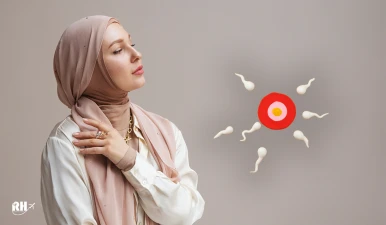
One of the most challenging issues in contemporary medical jurisprudence is the religious ruling on egg donation for couples where the wife is medically unable to use her own eggs. This issue is directly tied to foundational fiqh concepts such as lineage (nasab), mahram relationships, marriage contracts, and fertilization, and has received different answers from Shia and Sunni scholars. In Sunni jurisprudence, the overwhelming majority of contemporary scholars (including the Islamic Fiqh Academy in Jeddah, Al-Azhar, and Sheikh Yusuf al-Qaradawi) consider egg donation forbidden, viewing it as an instance of "confusion of lineage" (ikhtilat al-ansab) and comparable to adultery, permitting fertilization only between legitimate spouses. In Shia jurisprudence, however, following Imam Khomeini's historic 1995 fatwa permitting artificial insemination between husband and wife, many contemporary Marja's — including Ayatollah Khamenei, Ayatollah Sistani, and Ayatollah Makarem Shirazi — consider egg donation permissible under specific conditions. This article examines the precise fatwas of each Shia Marja, the detailed views of Sunni scholars, jurisprudential challenges such as lineage and mahram issues, and proposed solutions such as temporary marriage contracts. For specialized consultation on infertility treatment that observes religious principles at Iran's most reputable centers, you can contact Raadina Health Medical Tourism.
Proponents and Opponents' Views on Egg Donation
Egg donation in Islam has many proponents and opponents, both from the Shia and Sunni schools of thought. Some consider it completely permissible (halal). They believe that if this method causes no harm to the donor, the recipient, or the child, and no unlawful act occurs, it is completely permissible and lawful. This method helps couples who have longed for children for years to experience the sweet dream of parenthood. Furthermore, these individuals emphasize that the resulting child will be the legitimate child of the father and the mother (the recipient woman). The other group opposes this treatment method, believing that it violates human dignity and honor and will cause problems in maintaining the lineage (Nasab) and blood ties between parents and children.
/75_1762945821_large_1762963468_large.webp "Proponents and Opponents' Views on Egg Donation")
Views of Shia Scholars on Treatment with Donor Eggs
In Shia jurisprudence, pregnancy using donor eggs is generally considered permissible, and most Marja's agree with it under specific conditions. However, on finer points — such as whether a temporary marriage contract is required, or how strictly certain precautions must be observed — opinions differ somewhat among the various sources of emulation.
Ayatollah Khamenei's View on Donor Eggs
Ayatollah Khamenei believes that egg and embryo donation is completely lawful under specific conditions. He stated, however, that no unlawful touch, unlawful looking, or illicit sexual relationship should occur during embryo formation and transfer.
Ayatollah Sistani and Other Supporting Scholars
Ayatollah Sistani and many other Shia Marja's believe that this method is an example of a good deed that helps preserve the foundation of the family.
More Cautious Views (Ayatollah Nouri Hamedani and Ayatollah Vahid Khorasani)
These Marja's do not consider donor eggs forbidden, but they have expressed concern about possible complications arising later and believe the method should be carried out with more precise care within specific religious and legal frameworks.
Views of Sunni Scholars on Egg Donation
In Sunni jurisprudence, egg donation faces broader opposition, with most scholars considering it impermissible due to the introduction of a third party into reproduction and the resulting confusion of lineage. Positions range from a formal institutional ruling to individual scholarly opinions of varying strictness.
The Ruling of the International Islamic Fiqh Academy
The most authoritative institutional ruling comes from the International Islamic Fiqh Academy (affiliated with the Organization of Islamic Cooperation), which at its Third Session (Amman, 1986) prohibited fertilizing a husband's sperm with an egg from a woman other than his wife, citing the resulting confusion of lineage. This ruling remains the primary reference for most Sunni fatwa institutions.
Sheikh Ibn Baz and Sheikh Ibn Uthaymeen's View
These scholars consider egg donation unlawful due to the introduction of a third party into reproduction, believing that any combination of sperm and the egg of a non-wife — even with the intention of treatment and in a laboratory setting — is forbidden.
Al-Azhar's View
Al-Azhar scholars (including Sheikh Sayed Suleiman) hold that fertilization using a couple's own sperm and egg remains permissible as long as the marital bond exists; however, if the egg or sperm belongs to neither spouse, it is forbidden due to the resulting mixing of lineage.
A Conditional Permissive View — Sheikh Muhammad Salih al-Munajjid
Unlike most Sunni scholars, Sheikh Muhammad Salih al-Munajjid holds that if the donor woman marries the recipient man, even through a temporary marriage (Nikah Mut'ah), using her egg for the recipient woman's pregnancy is permissible.

Mahram Status in Egg Donation — Is a Mahram Relationship Created Between the Child and the Donor?
One of the main concerns families face when using donor eggs is clarifying the child's mahram status with each party involved in the process. The jurisprudential answer to this question splits into three separate relationships: mahram status with the egg donor, mahram status with the recipient woman (the gestational carrier), and mahram status with the father (the sperm owner). Each carries a different ruling.
The Child's Mahram Status with the Egg Donor
Yes. According to the majority of Shia jurists, the donor woman is genetically the child's shar'i mother, and all the rulings of mahram status between mother and child apply between them. This mahram status is not limited to the donor alone; the child is also mahram to all her blood relatives — her father, mother, sister, and brother. For this reason, if the donor has other children, the resulting child is considered their full (paternal half) sibling, meaning a genuine blood relationship exists between them, and marriage between these children is religiously forbidden — a point that must be documented and never kept secret, to prevent an unintended marriage in the future.
The Child's Mahram Status with the Recipient Woman (the Gestational Carrier)
Here there is greater disagreement among the Marja's. Although the recipient woman is not the child's genetic mother, most Marja's (including the office of Ayatollah Sistani) consider her to hold mahram status equivalent to a mother due to carrying and nurturing the pregnancy in her own womb, and she is not required to observe hijab in front of the child. However, some Marja's do not consider this mahram status definitive and instead suggest breastfeeding as a precautionary solution: if the recipient woman breastfeeds the infant after birth under the required religious conditions, the rulings of "radaa" (milk-kinship) mahram status will also apply between the child and her husband and his relatives — which also resolves the ambiguity of mahram status with the recipient's husband (the child's social father).
The Child's Mahram Status with the Father (the Sperm Owner)
This relationship is the clearest of all. The child is religiously considered the offspring of the sperm owner, and full mahram status — along with all its effects such as inheritance and financial support — applies between them and all of the father's blood relatives.
The Sunni View on Mahram Status
Since the majority of Sunni scholars consider egg donation itself impermissible, the question of mahram status typically does not arise within official Sunni fiqh. However, under the conditional view of Sheikh Muhammad Salih al-Munajjid — where a temporary marriage between the donor and the recipient man gives the arrangement religious legitimacy — since the donor is, at that moment, temporarily the man's legal wife, a mother-child mahram relationship forms between her and the child, and a father-child mahram relationship forms between the sperm owner and the child, in the same way explained under Shia jurisprudence.
/94_1763793324_small.webp "دریافت تخمک اهدایی در خارج از کشور؛ بهترین کشور کدام است؟")
Will the Child Born from Donor Eggs Inherit from Me or from the Egg Donor?
This is one of the most complex jurisprudential questions in this field and does not have a single definitive answer.
According to a fatwa from the office of Ayatollah Sistani, attributing the child to the recipient woman (the gestational carrier) or to the egg donor is problematic; therefore, as an obligatory precaution, the matter of inheritance must be resolved through mutual settlement (mosalaha) between the two women. In other words, inheritance does not automatically and definitively belong to one side — it must be resolved by mutual agreement.
Other Marja's consider the child to be affiliated with the sperm and egg owners (the genetic parents), in which case inheritance would generally flow toward the donor woman (as the biological mother) and the sperm owner, not the recipient woman. For this reason, it is recommended that this matter be clarified and documented with a Marja or legal advisor before proceeding, to prevent potential disputes in the future.
The Quran's View on Egg Donation
The Quran does not directly refer to the issue of egg donation, but generally, the Sharia can be extrapolated to this issue. The main condition for using this treatment method in all fatwas (religious decrees) is the avoidance of illicit sexual relations, the full consent of the parties, and the preservation of human honor and dignity. If these principles are fully observed, egg donation and pregnancy using this method will be permissible.
Iran: The Hub of Egg Donation in the Islamic World
Iran, as one of the advanced countries in medical science and with a Shia majority, is the only Islamic country that legally performs egg donation and surrogacy under the supervision of religious authorities. Iran has well-equipped treatment clinics with professional staff. Not only have many Iranian couples had children using this method, but many couples from other countries have also traveled to Iran to use this treatment method.
Conclusion
Egg donation is one of the infertility treatment methods in Iran and many countries worldwide. Despite many challenges, this method is completely permissible and legal under specific conditions in Islam, helping infertile couples realize their sweet dream of having children.
Contact us for a free initial consultation about Egg donation
 WhatsApp
 Telegram
 Facebook
 Email
Email
Frequently Asked Questions
Is it permissible to receive donor eggs from one's sister-in-law (wife's sister)?
Yes, this is permissible in principle, but there is an important consideration: the resulting child, since its genetic mother is the wife's sister, is religiously considered a paternal half-sibling of that sister's own children. This means a genuine blood relationship exists between them, and marriage between these children will be religiously forbidden in the future.
Is it permissible to receive donor eggs from a married woman?
Marja's such as Ayatollah Makarem Shirazi, who require a temporary marriage contract between the recipient man and the donor woman, face a difficulty in this case, since a married woman cannot simultaneously contract marriage with another man (polyandry is forbidden in Islam). However, Marja's such as Ayatollah Khamenei, who do not require a marriage contract and consider avoiding unlawful touch and looking sufficient, do not face this obstacle. For this reason, a direct istifta (religious inquiry) to one's own Marja is essential in this specific case.
Is egg donation halal?
Yes, the act itself is not inherently forbidden. The overwhelming majority of Shia Marja's (including Ayatollah Khamenei and Ayatollah Sistani), along with some Sunni scholars, consider it permissible under conditions such as avoiding unlawful touch and looking.
Is it permissible to donate an egg from one woman to another?
In Shia jurisprudence, transferring an egg from one woman to another is considered permissible (on condition of fertilization with the recipient woman's husband's sperm and observance of religious limits). The main difference between the two schools lies exactly here: Sunni scholars consider this act, in and of itself and regardless of conditions, an instance of mixing lineage; Shia scholars consider it permissible when specific conditions are observed.
Who is religiously considered the parent of a child born from donor eggs?
According to the prevailing Shia fatwas, the child is religiously affiliated with the sperm owner and the egg owner (i.e., the recipient father and the donor woman); affiliation with the recipient woman (the gestational carrier) requires religious precaution, though some Marja's, such as Ayatollah Sistani, propose solutions such as the recipient woman breastfeeding the infant to establish milk-kinship mahram status. In Sunni jurisprudence, only under the conditional view (such as that of Sheikh al-Munajjid) is the child affiliated with these same two individuals (the egg donor and the sperm owner) as the shar'i parents.

No reviews
Your comment